In the context of the global push for energy transition and sustainable development, efficiently separating and purifying methane has become a critical issue in the energy sector. As the primary component of natural gas, associated gas from oil fields, and biogas, the purity of methane directly affects energy utilization efficiency and environmental impact. Methane decarbonization membrane technology is an efficient method that uses gas separation membranes to remove carbon dioxide (CO₂) from methane-rich gas mixtures. As a cutting-edge and highly promising innovative technology, methane decarbonization membrane technology is gradually gaining prominence and demonstrating tremendous application potential in the energy industry.
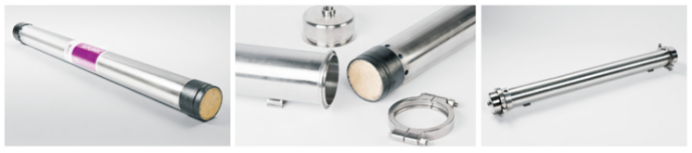
The working principle of gas separation membranes is to allow gases to selectively permeate through the membrane surface. The driving force for gas permeation across the membrane is the pressure difference between the permeate side (the inside of the hollow fiber) and the feed side (the space outside the hollow fiber). The greater this pressure difference, the higher the proportion of gas that permeates through the membrane. By exploiting the differences in permeation rates of various gases through the membrane material, it is possible to separate methane from carbon dioxide. Typically, CO₂ has a higher permeation rate than CH₄; therefore, CO₂ preferentially passes through the membrane, while CH₄ is retained.
Compared to traditional carbon dioxide removal processes such as the amine absorption method, methane decarbonization membrane technology does not require complex procedures like heating to achieve carbon dioxide separation. In conventional processes, heating to desorb carbon dioxide typically consumes large amounts of energy; in contrast, membrane separation can be carried out at ambient or relatively low temperatures, significantly reducing energy consumption during the separation process and aligning with the current global trend toward energy conservation and emission reduction in the energy sector.
Application fields:
Industrial waste gas treatment: Recovering methane, reducing carbon emissions, and achieving resource utilization.
Natural gas purification: Removing CO₂ from natural gas to increase its calorific value and pipeline transportation efficiency.
Biogas upgrading: Removing CO₂ from biogas to increase methane concentration for power generation or vehicle fuel.
Advantages of methane purification membranes for methane decarbonization:
Low methane loss during the purification process.
High energy utilization efficiency during methane purification; no need for additional auxiliary materials such as water adsorbents (amines, glycols); no environmental emission pressure.
Easy to control and adjust when flow rate or composition changes.
Flexible system that can be started and stopped in short time intervals, ensuring a high degree of flexibility.
Since its establishment, Guochu Technology (Xiamen) Co., Ltd. has been committed to membrane separation technology as its core, dedicated to promoting novel separation technologies. The company continuously explores new applications of advanced membrane separation technologies in fields such as biopharmaceuticals, microelectronics, metallurgy, chemical engineering, machinery, food, dairy, beverages, and the environment. By addressing the highly differentiated needs of various clients, Guochu Technology provides targeted integrated solutions for filtration and purification, improving product quality and meeting customer requirements.


