Green plums are a tropical fruit that serves both as food and medicine. The primary flavor compounds and health-promoting substances in green plums are organic acids, which offer benefits such as regulating gastrointestinal function, promoting saliva production to quench thirst, relieving fatigue, and providing radiation resistance. Green plums are often processed into dried fruits and candied treats for consumption. However, in the production process of these preserved fruits, the marinating stage of the fruit pulp generates large quantities of brine containing high levels of salt and concentrated organic matter. Due to its excessively high salt content, this brine cannot be directly utilized. If discharged without proper treatment, it could cause severe pollution of soil and water resources.
The pickling liquid of green plums contains relatively abundant fruit exudates, including various organic acids, sugars, amino acids, and flavonoid compounds. After desalination, the resulting pickling liquid can be used to produce food additives and a variety of health supplements. The flavonoid compounds exhibit remarkable effects in preventing and treating cardiovascular diseases and thus possess significant medicinal value. The desalinated green plum pickling liquid boasts high nutritional value and serves as a key ingredient in certain space foods. Conducting desalination treatment on green plum pickling liquid not only enables the development of high-value-added products from this liquid but also significantly reduces the environmental impact caused by wastewater discharge from dried fruit production enterprises.
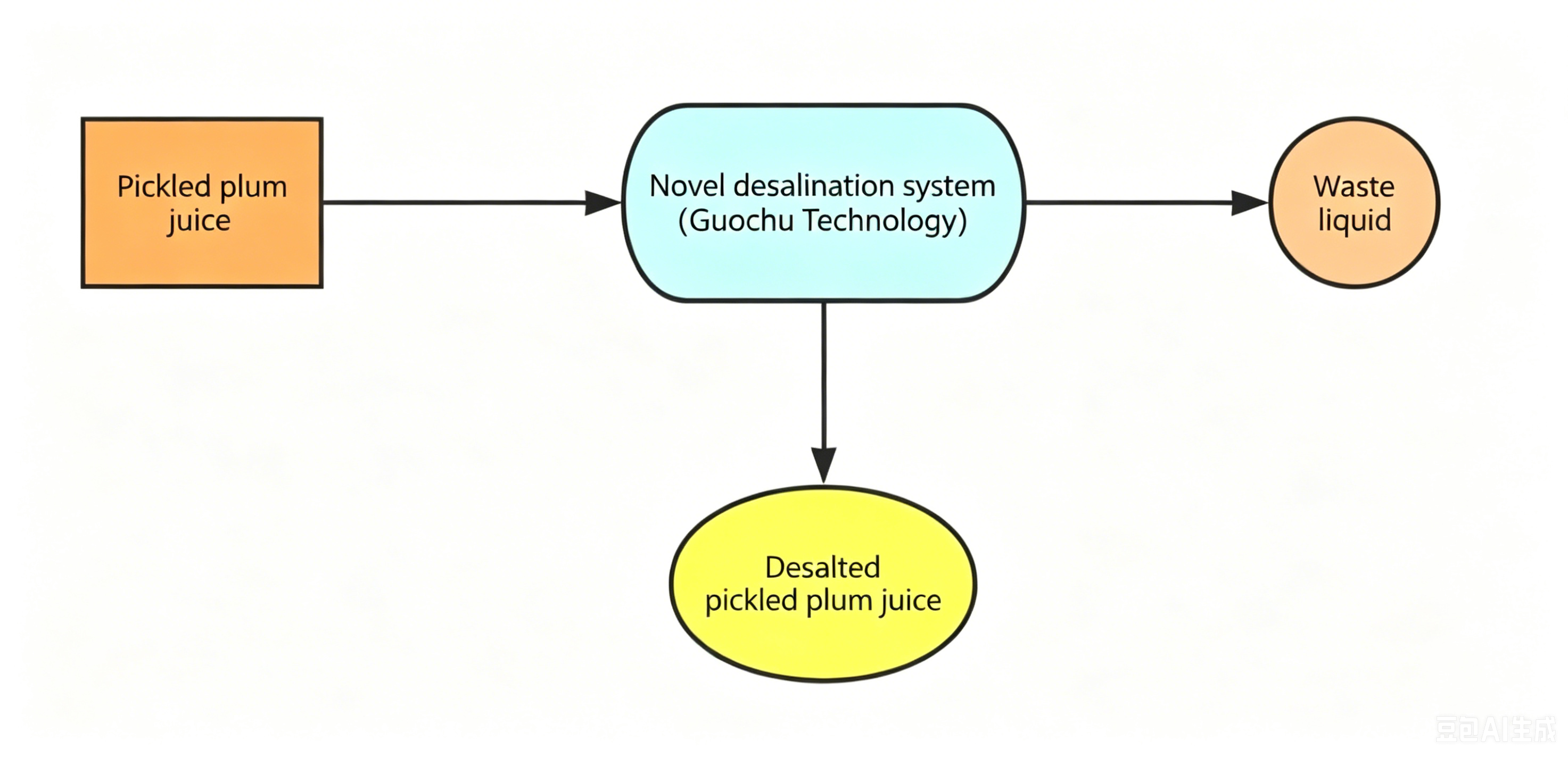
Currently, a new separation technology has been developed to desalinate pickling brine from green plums. This technology not only removes salt but also preserves organic compounds in the plum juice, such as organic acids, sugars, and amino acids. The new desalination technology boasts several advantages: it features simple operational steps, requires no addition of other substances during the process, occupies a small footprint, and allows for human-controlled desalination efficiency. It is an environmentally friendly and cost-effective new desalination technology with significant advantages in practical applications.